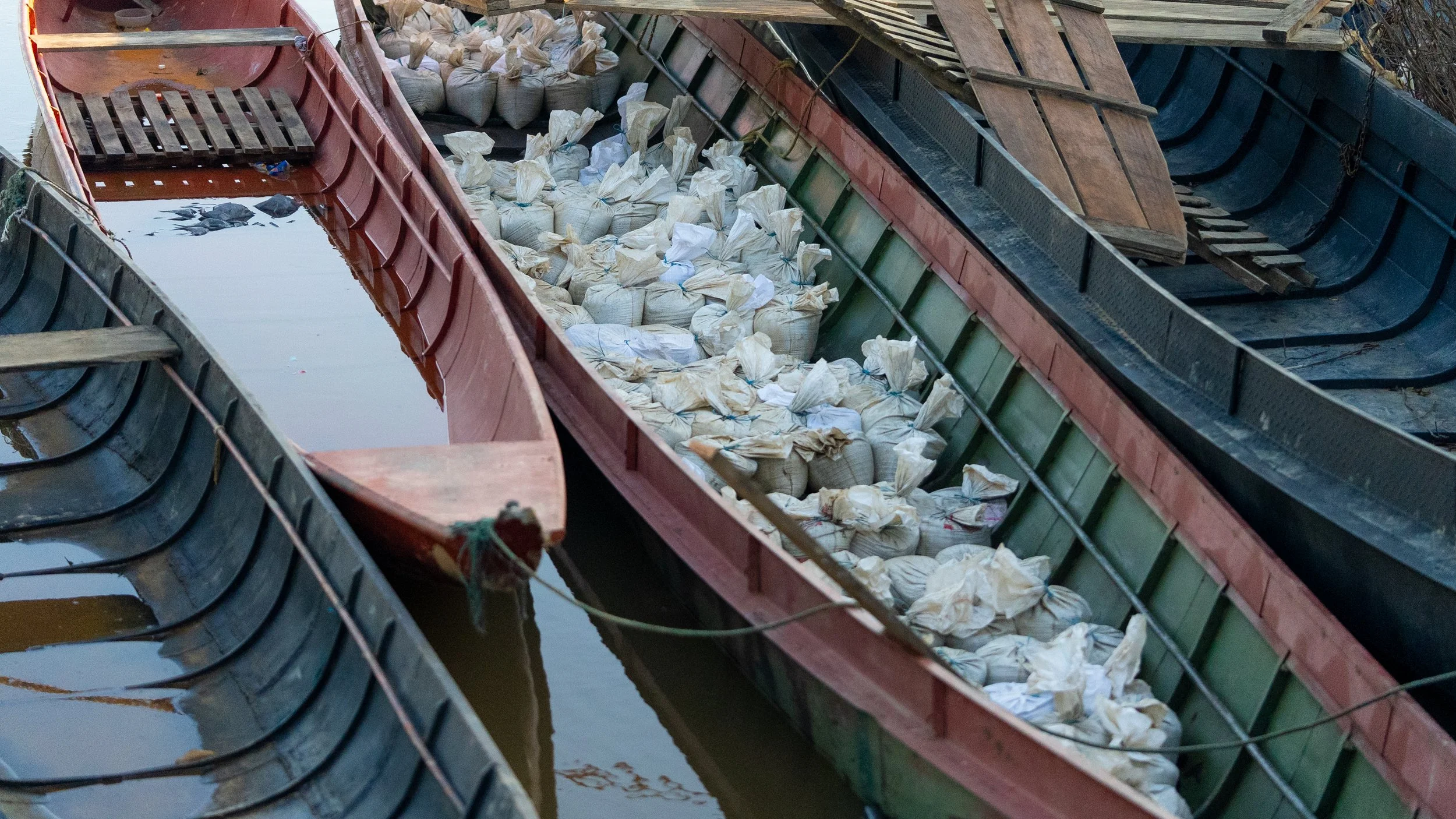
YUCA BRAVA
Finding other ways of relating to toxicity.
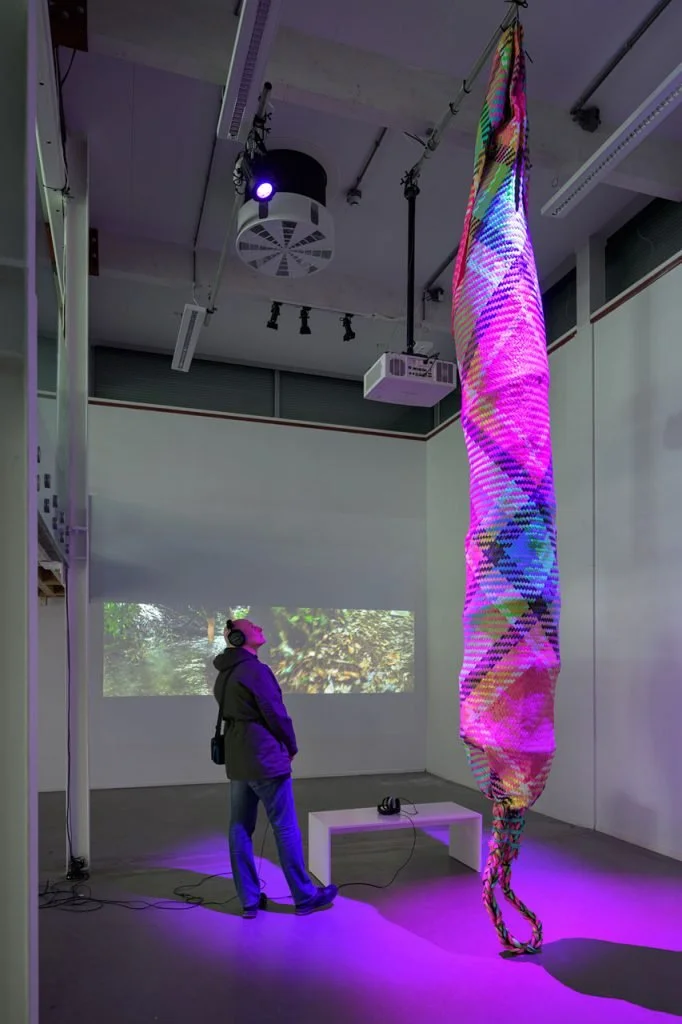
video installation, publication, sebucán woven in recycled plastic
WORK IN PROGRESS
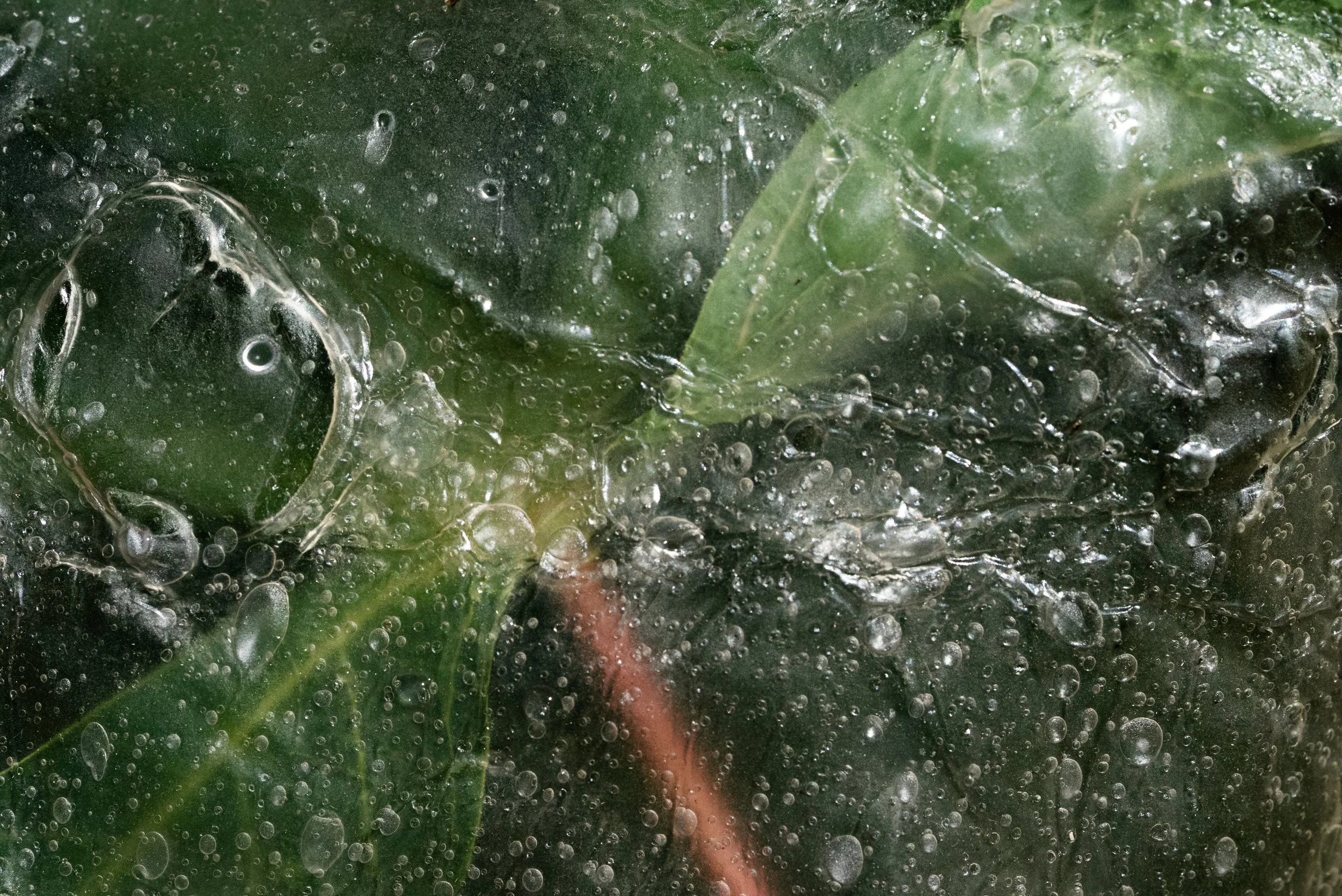
2-channel video installation, cassava starch screens, weaving in recycled plastic suncho, perfume, gold & opale blue Map & publication
After Coca para comer and Agave, Yuca Brava closes the trilogy Tired Soil, Exuberant Life.
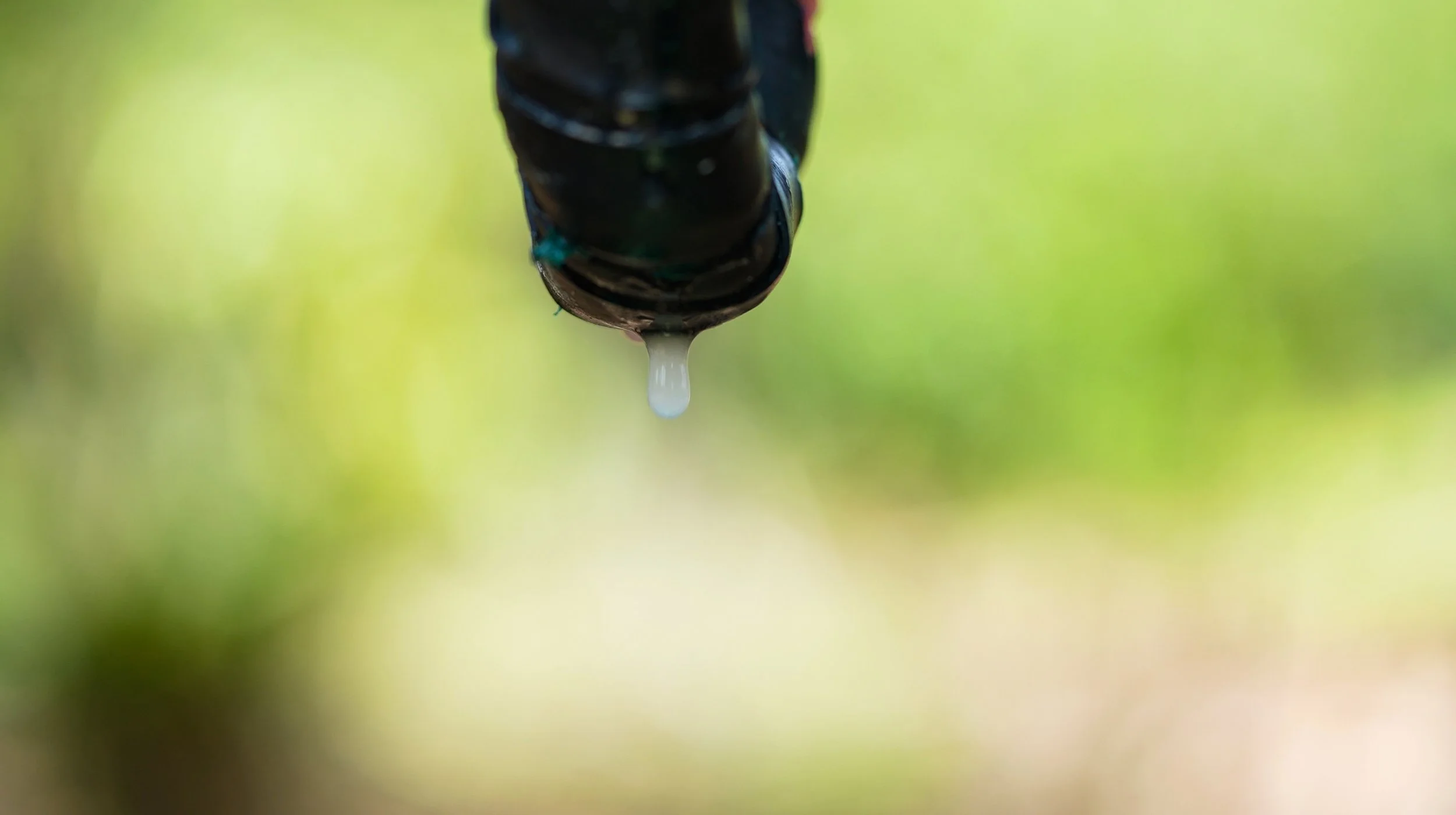
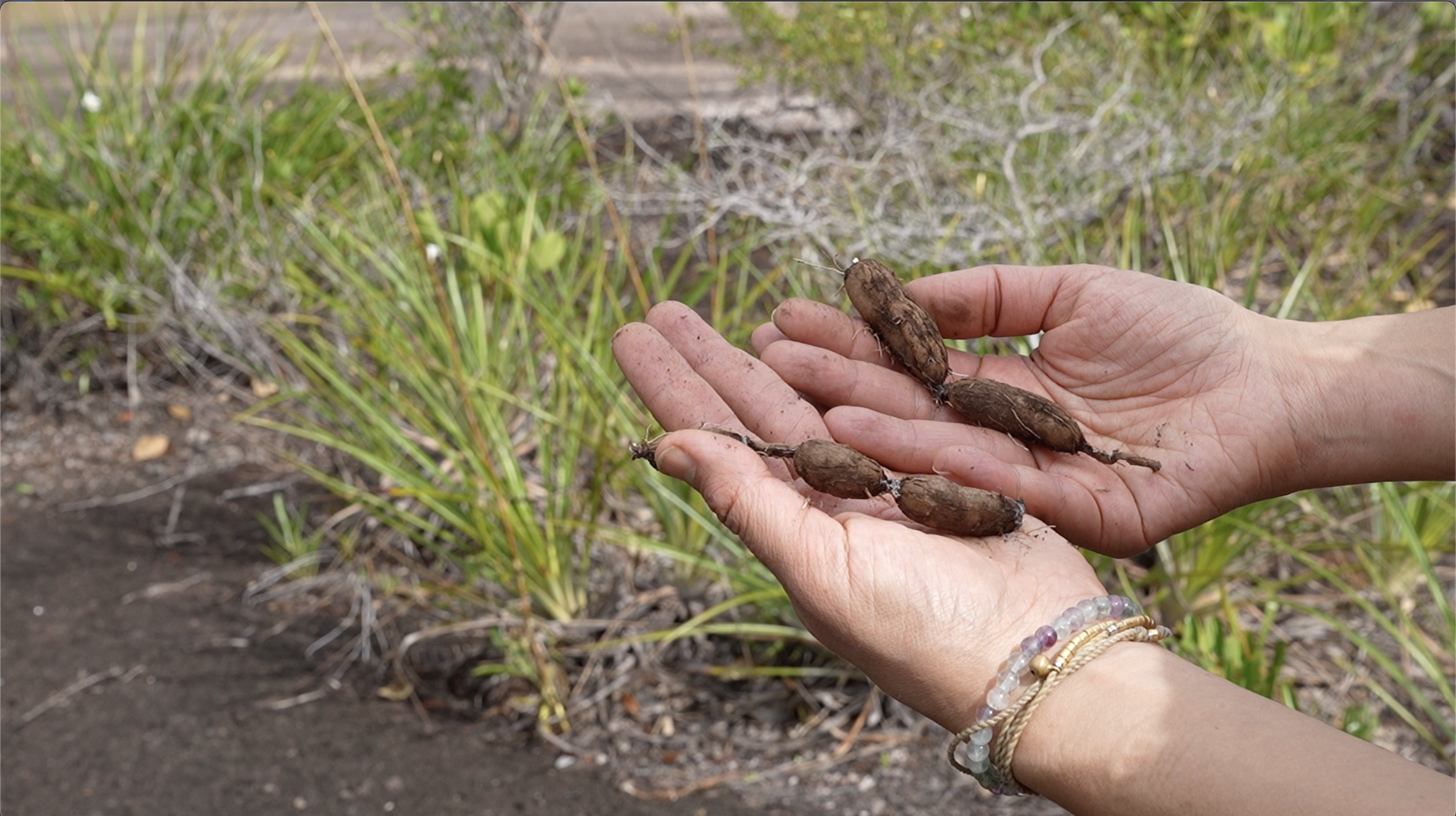
Yuca brava is a toxic tuber, charged with cyanide, yet an essential food for many Amazonian communities. The project explores this apparent contradiction: how can a toxic plant become food? How does it adapt to intensely sunny climates and poor soils?
The work focuses on the relationships that make this transformation possible. It looks at the practices, affects and forms of knowledge circulating between yuca brava, humans, other animals and plants, as well as soils, waters, fire, winds, microorganisms and fungi. Together, they participate in the life of the territory of Puerto Inírida and the many rivers that cross it.
The Amazon is a territory deeply marked by extractivism. For centuries, it has been treated as a reservoir of resources serving Western interests: timber, cinchona, skins, fish, rubber, fibres, but also enslaved humans and animals, cocaine, gold, coltan, uranium and rare earths. Today, its waters are contaminated by mercury and cyanide salts, while riverbeds are dredged and their sediments discharged.
The project asks: what can human and more-than-human beings living in this territory do with all these toxicities? And how can they confront the “civilising” and Christian spectre that still accompanies these forms of domination?
In a present crossed by multiple toxicities, which Indigenous peoples continue to metabolise through their forms of resistance, Yuca Brava is rooted in a form of buen pensar — a practice of thinking grounded in the Andean philosophy of buen vivir.
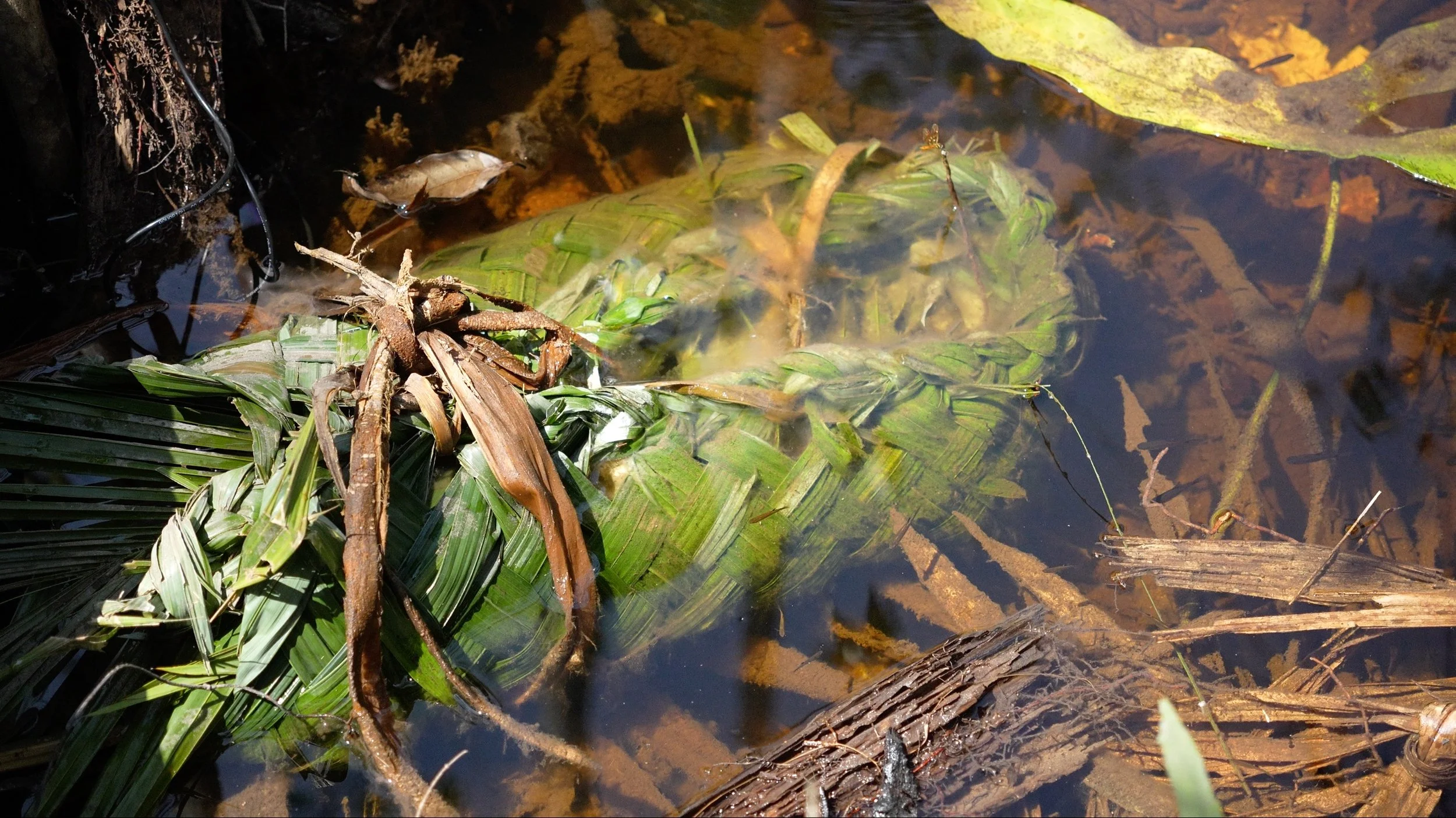
The project takes shape through the practices and techniques involved in the chemical transformation of yuca brava: technologies that remove its poison and transform it into food.
Credits
In collaboration with:
Yuca brava and the territory of Puerto Inírida; Isabel Cuéllar Restrepo; Andrés Cuéllar, Isabel’s father (Coco Nuevo community, terra firme, Curripaco Nation); Manuel Rodríguez (Platanillal community, Curripaco Nation); Melvino Izquierdo (Puinave Nation); Miguel González (Coco Viejo community, Curripaco Nation); Francisca Evaristo Yusuin (Kenke, Resguardo Vitina, Curripaco Nation); Romelio Valencia (Platanillal community, Tucano Nation); Nancy Patricia López, @taconescercanos (Resguardo El Paujil, Puinave Nation); Magally Ortiz (Inírida, Museo Comunitario del Guainía).
Sebucan weaving: Manuel Rodríguez, Curripaco Nation. Sebucan dedicated to Don Manuel Rodríguez, Curripaco knowledge keeper and father of Manuel.
Motion design: Camille Olympie
Music and sound: Sig Valax
Sound mix: Jules Wysocki
Camera: Camille Olympie & aniara rodado
Editing: Camille Olympie
Drawings: aniara rodado
Assistance in Colombia: Salomé Rojas
Assistance in France: Camille Olympie & Ezequiel Gonzales Camaño
Translocal expert: Fernando Serrano
Developed during the S+T+ARTS Buen-TEK residency, in partnership with IMPAKT and Más Arte Más Acción, and funded by the European Union as part of the S+T+ARTS initiative.