COCA PARA COMER
“It is time for the coca leaf to travel and speak for itself.”
video installation · performance
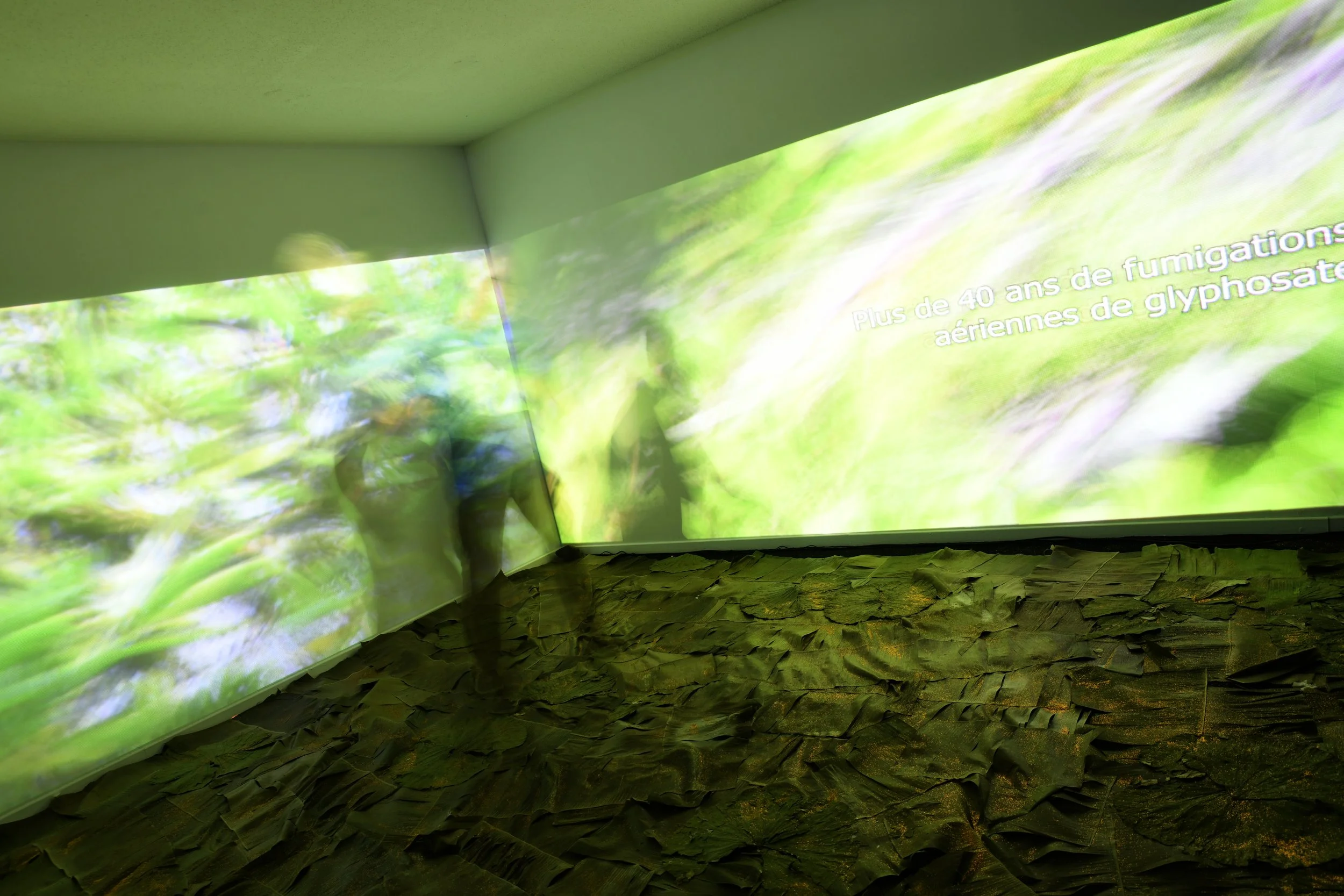
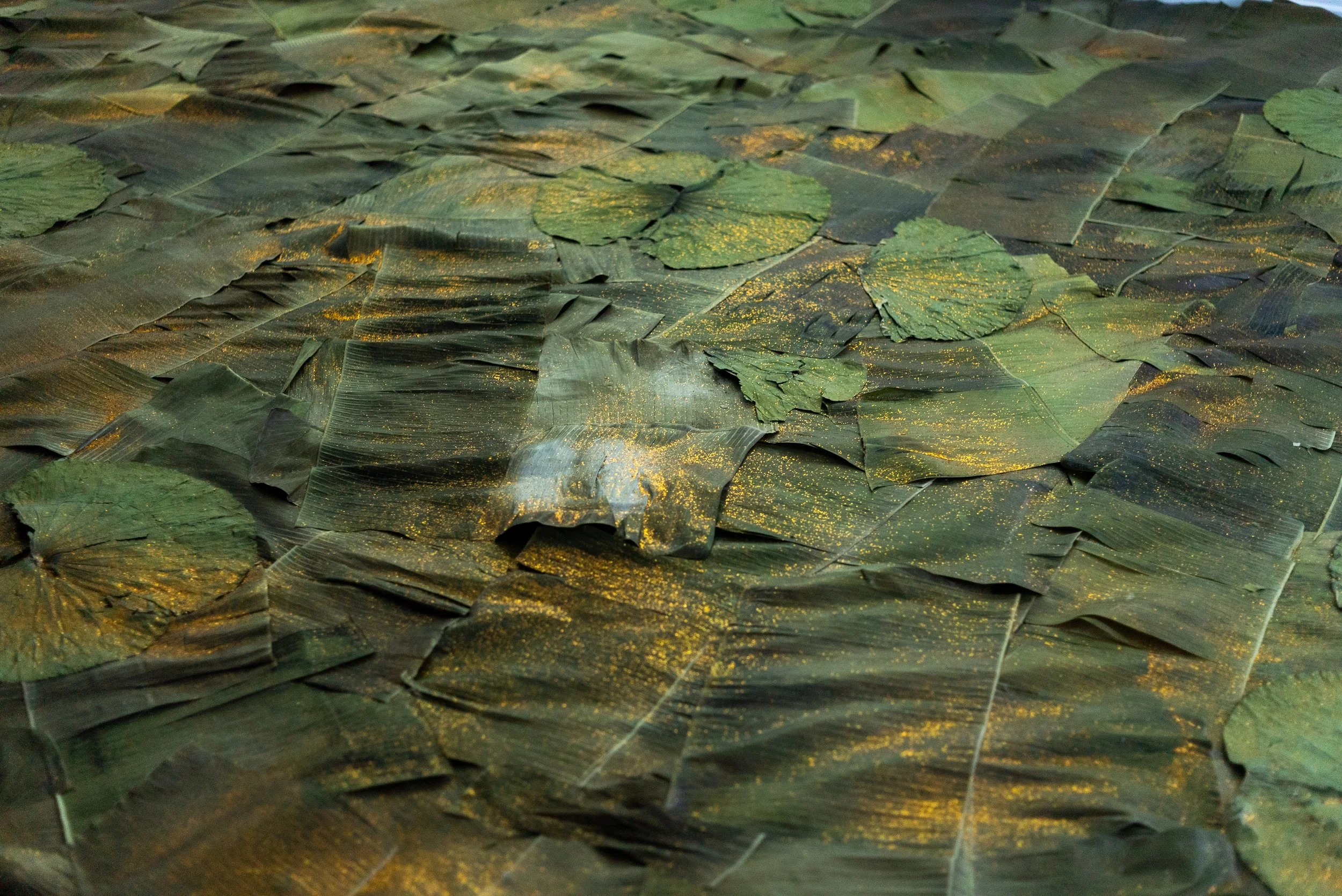
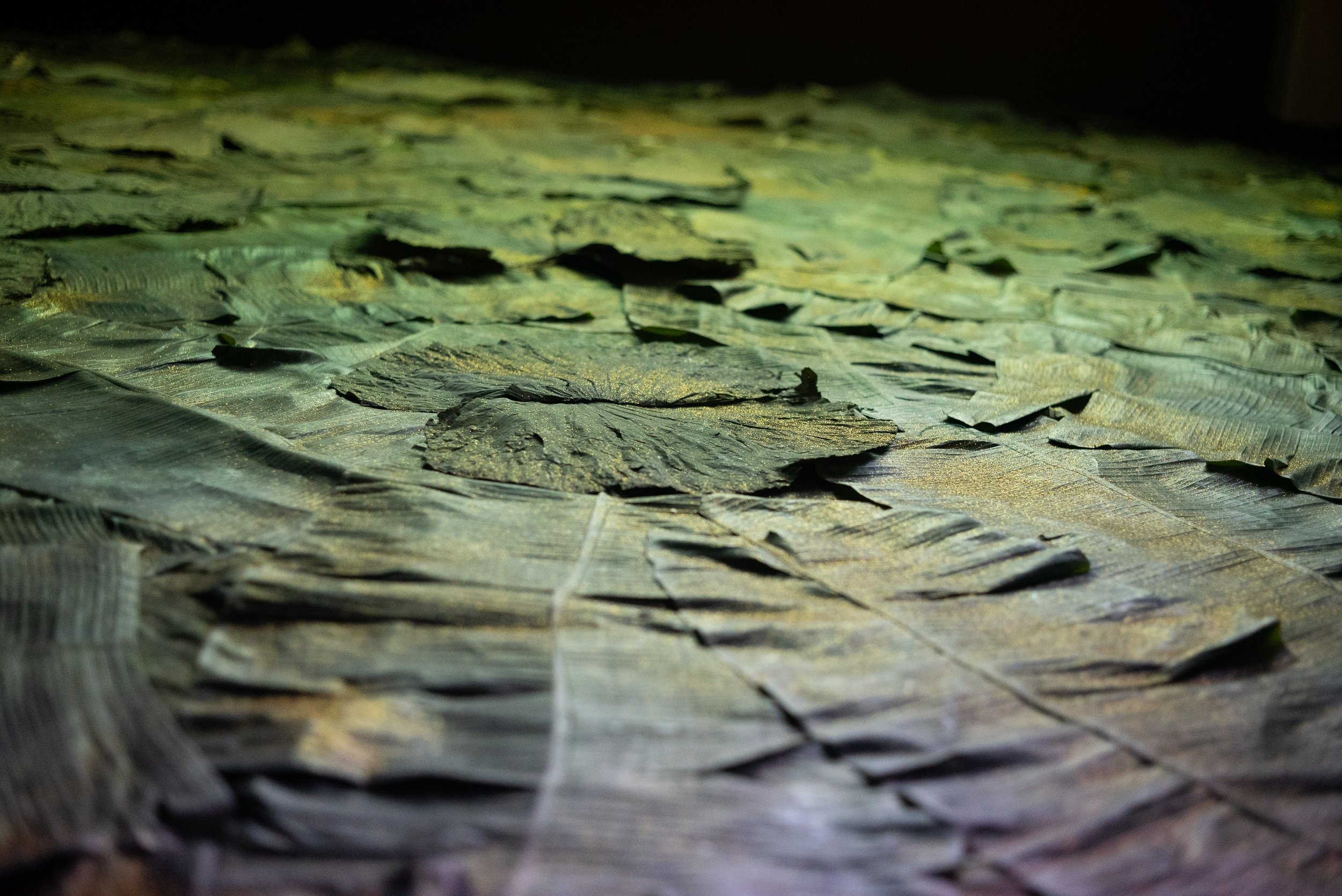
Banana leaf carpet, two-channel video installation.
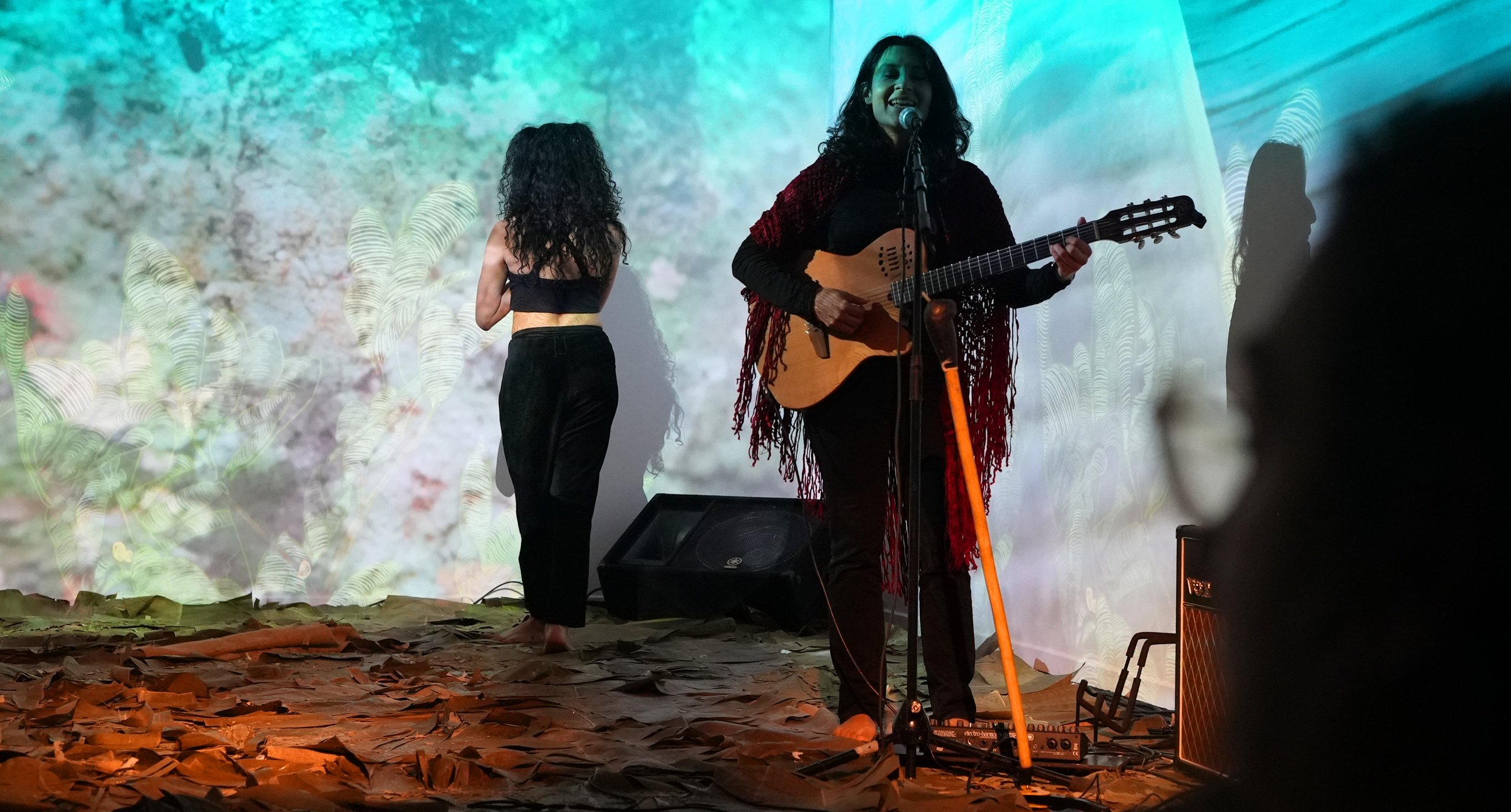
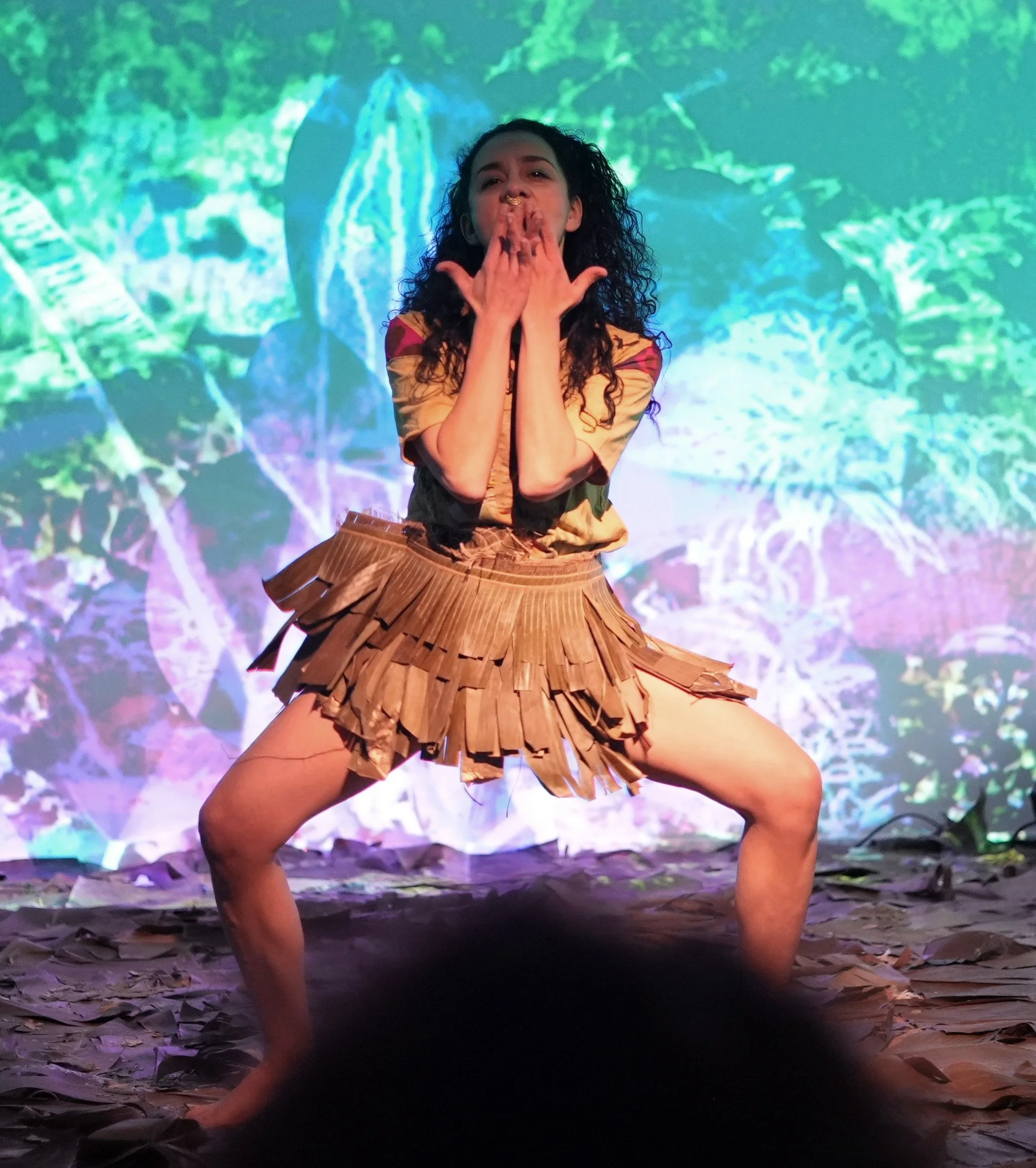
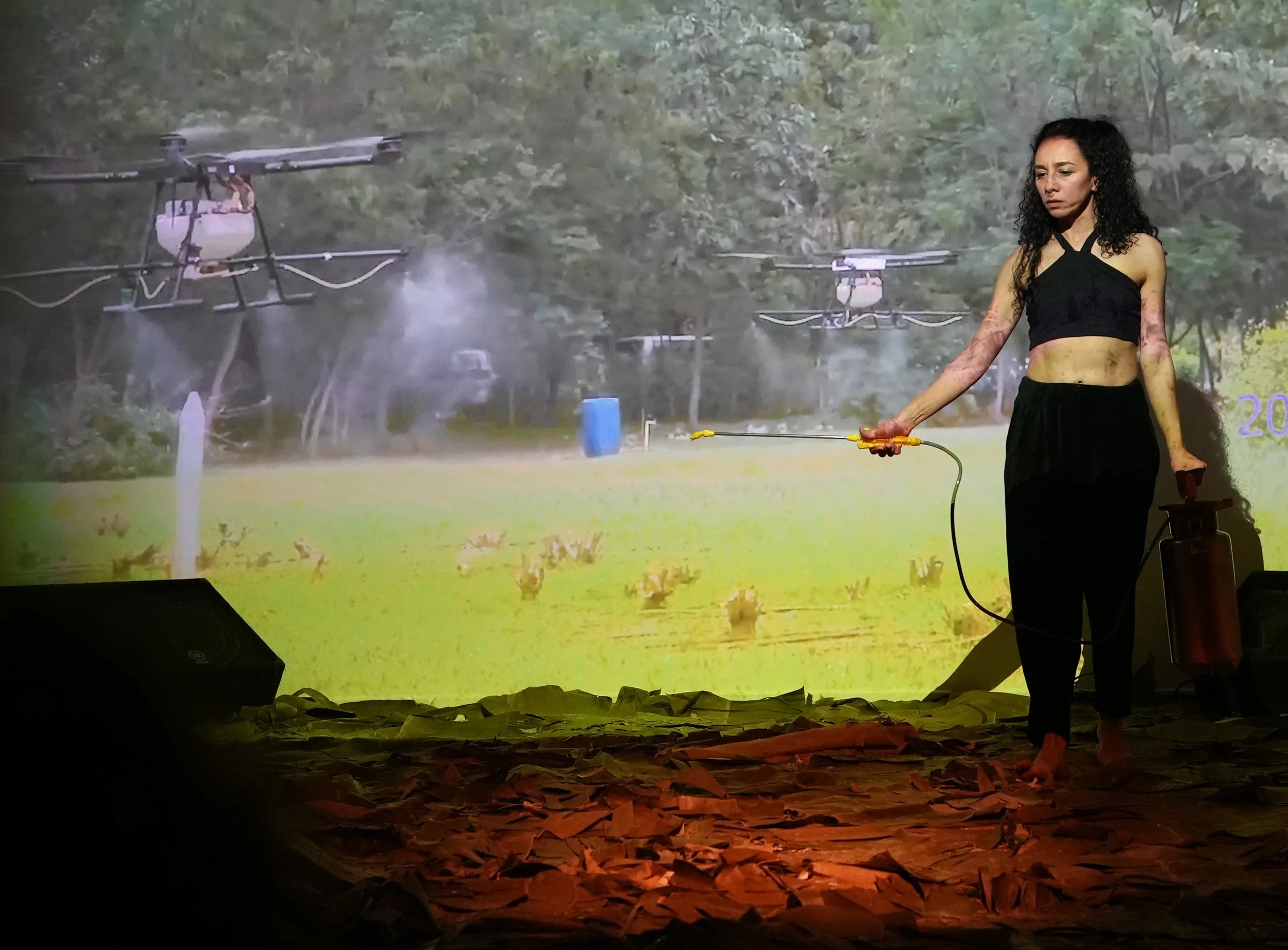
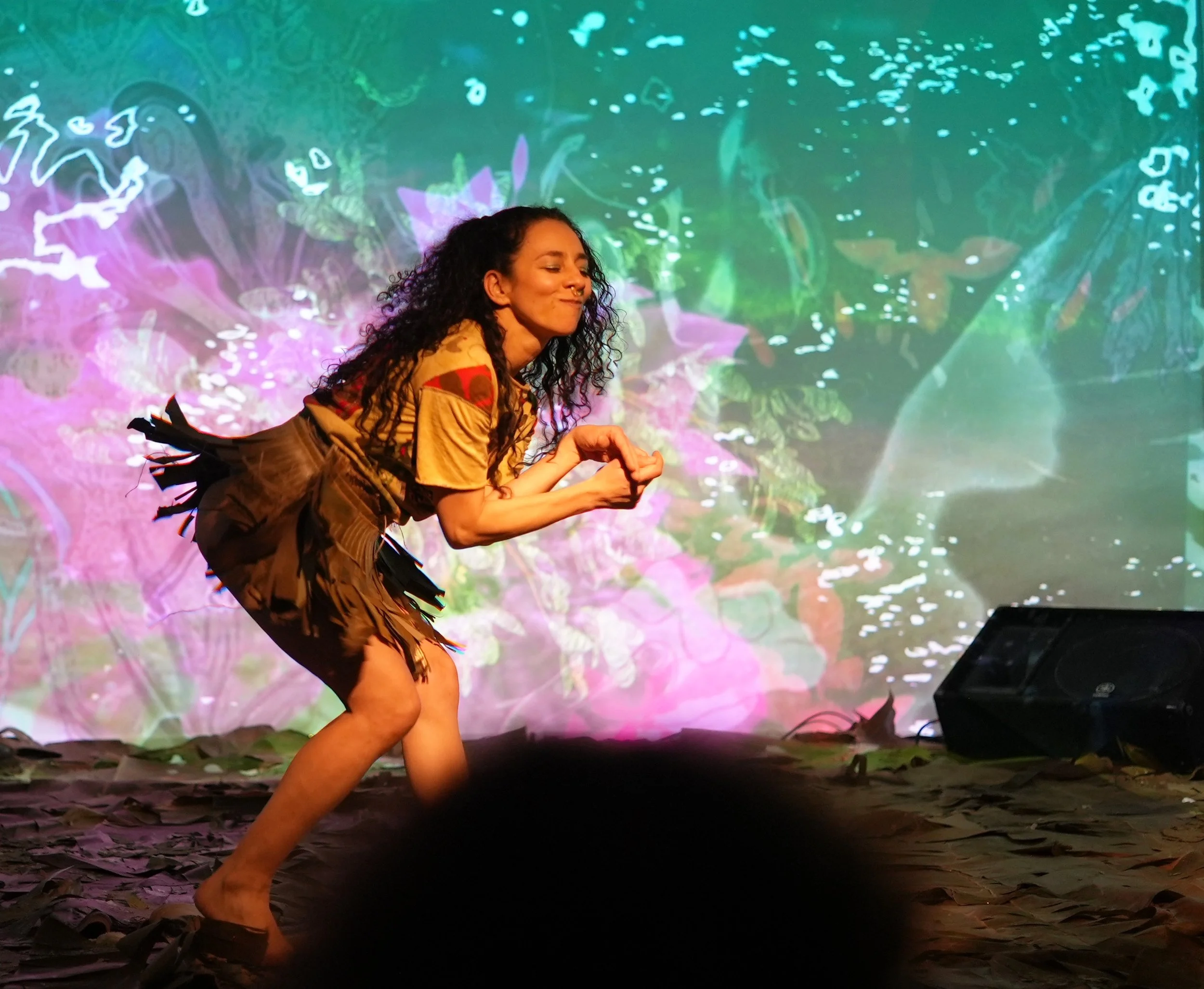
On a carpet made of banana leaves — a plant affected, like coca, by massive aerial poisoning — and with the wind carried by the Kussi, a Colombian Indigenous flute, this choreographic and video installation brings together dance, song, and documentary, political, poetic, and autobiographical narratives.
Coca is not the drug cartels or hyper-productivist capitalism. It is not deforestation or glyphosate sprayed from planes over the dead soils and polluted rivers of Colombia. Coca has nothing to do with the war on drugs.
For Indigenous peoples of the Andes and the Amazon, the coca leaf is nutritious, facilitates intercultural communication, enhances concentration at work, and helps find the righteous word. How did it become a raw material for the extractivist model of cocaine trafficking and become subject to massive destruction through glyphosate?
In Colombia, Peru, Bolivia, and Ecuador, Indigenous peoples who live and work with the coca leaf urge us: “It is time for the coca leaf to travel and speak for itself.”
I respond to this invitation with this project, as a migrant and member of a family whose history is marked by its relationship with cocaine and with the economic, political, and ethical systems sustained since the 1970s by the production and trafficking of this substance.
Credits
Music: Mónica López, Syg Valax
Performance, composition, voice, multi-instrumentalist & Kussi (Colombian Indigenous flute): Mónica López
Performance and composition for computer music and Perséphone: Syg Valax
Video editing, live animation, and general assistance: Camille Olympie
Coca and Mambe: Aimema Uai
Concept, texts, video direction, and performance: aniara rodado
With the support of: Popayork, Edinson Quiñones, Estefania García, Mayor Lorenzo Tunumbalá (Misak), Mayor Victoriano Piñacue (Nasa), La Minga de pratiques décoloniales, and Pact-Zollverein,